World Class Textile Producer with Impeccable Quality

World Class Textile Producer with Impeccable Quality

Key Sourcing Takeaways
Custom leotard orders run into trouble less often over fabric or print than over three structural choices buyers tend to leave unspecified: how the gusset is reinforced, whether the front needs a shelf bra, and how much support an open back actually has. These details are often missing from a general tech pack checklist unless the buyer calls them out as leotard-specific construction requirements. This guide walks through what each choice changes in production, what it costs in time or price, and when the decision is use-case rather than preference.
| Construction Decision | What to Specify | Production Impact | Driven By |
|---|---|---|---|
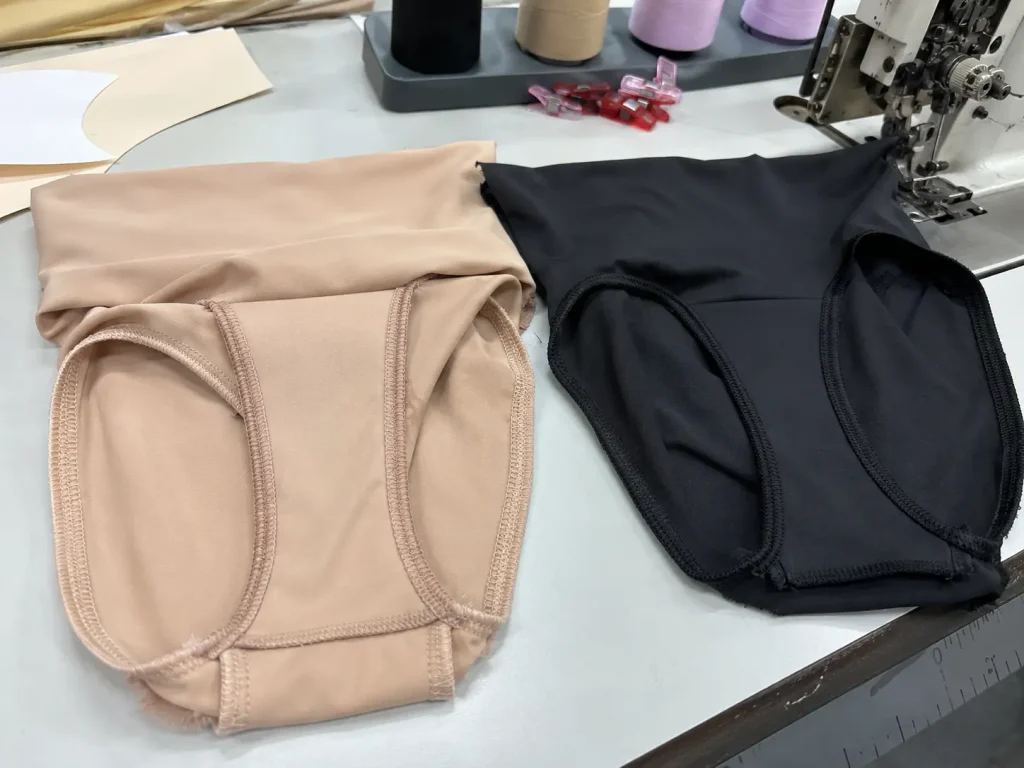
| Gusset reinforcement | Single-layer vs double-layer; contrast lining option | Double-layer adds a small per-piece cost increase; contrast lining adds more on top | Frequency of wear (daily training vs lower-use performance) |
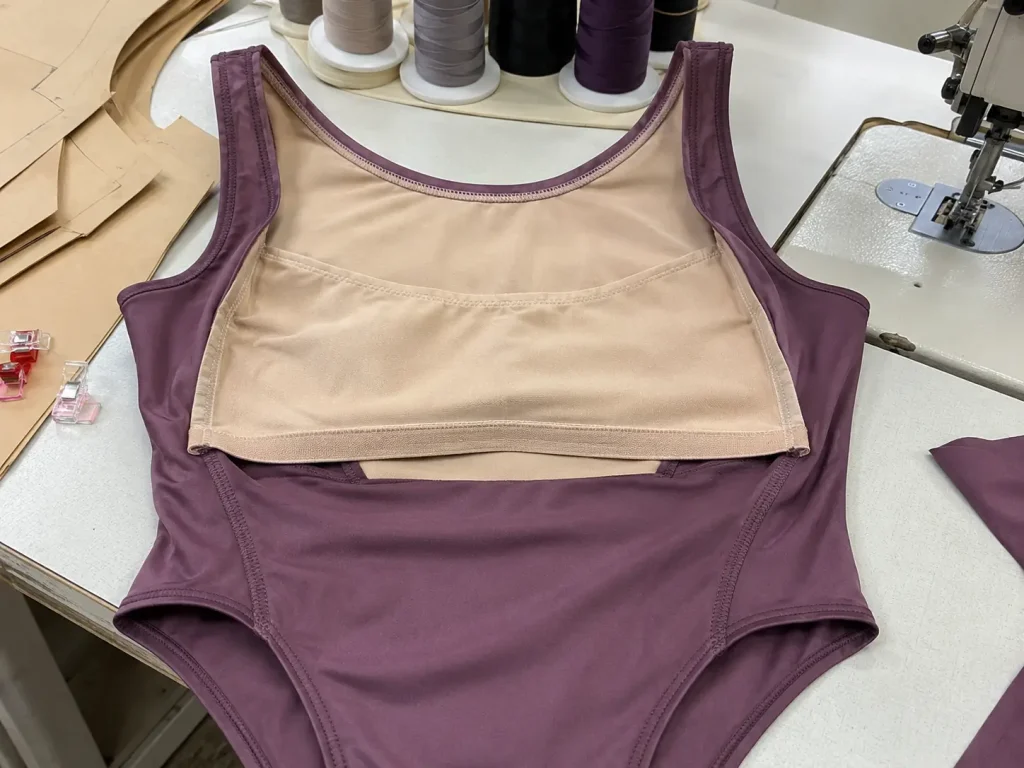
| Shelf bra/lining | Lined front vs no lining | Adds roughly 3–7 days to sampling; MOQ stays at 100/style/color | Training vs performance/competition use |
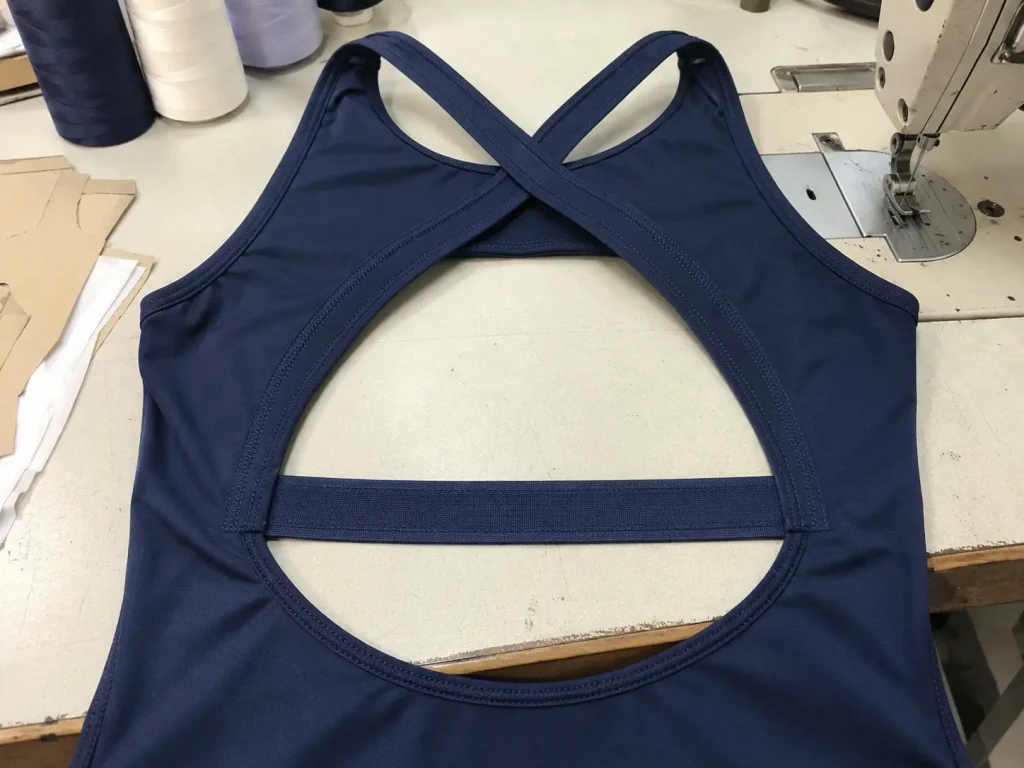
| Back style | Open back vs closed back | No MOQ or cost change, but needs an elastic/strap spec to hold support | Design preference, paired with a support detail |
Across all three, the production impact is manageable once it's specified upfront — the real risk is leaving any of them undocumented and discovering the gap at the fit-sample stage.
Most factories quoting custom leotards are really quoting fabric, color, and print combinations — the same variables covered by a standard clothing tech pack and color approval process used across any custom apparel order. Industry groups like AAFA treat supply chain and sourcing as a dedicated apparel priority, and leotards are no exception. For buyers, that makes clear construction documentation part of keeping production repeatable. What those general steps don't cover is the leotard's own structure: how the gusset is reinforced, whether the front needs a built-in lining, and how much fabric the back panel actually has at the cutout line. These three decisions are specific to leotard construction and need to be confirmed separately from the standard OEM checklist, not folded into it.
This is a different question from how a leotard's gusset compares structurally to a unitard's — that classification logic is a separate topic; here the question is how the gusset inside a leotard itself gets reinforced.
Double-layer reinforcement at the gusset adds only a small increase to the per-piece cost over a single-layer construction. The point of building it this way is straightforward: it's aimed at a garment that won't come back with a crotch-seam failure after repeated stretching and washing. Specifying a contrasting lining fabric or a padded panel at the gusset for extra reinforcement adds further cost on top of the double-layer base, since it introduces a second material into a small, high-stress area rather than simply doubling the existing one.
For brands ordering training-heavy programs — leotards that see daily wear and frequent washing — the double-layer build is typically worth the modest cost increase. For lower-frequency-use performance pieces worn mainly for recitals or competitions, a single-layer gusset is usually adequate, and the savings are better spent elsewhere in the build. Either way, this kind of per-piece cost difference is the sort of detail worth checking against your pricing structure before sampling, rather than after the quote comes back higher than expected.
Whether a custom leotard needs a shelf bra is a use-case decision, not a styling preference. Training and rehearsal leotards usually run fine without one, since dancers typically wear a separate undergarment underneath during practice. Performance and competition leotards are different: judges and audiences see the garment with nothing layered underneath, so a shelf bra or full front lining becomes the standard spec rather than an optional upgrade for those programs.
Adding a shelf bra typically extends sampling by roughly 3–7 days compared with an unlined leotard, since the lining piece needs its own fit check before the factory commits to bulk cutting. The standard sampling timeline still applies on top of that — the lining adds time to the fit confirmation step, not a separate process — and it doesn't change the 100-piece-per-style/color minimum order quantity either way.
This is a separate issue from how strap width affects back coverage on camisole and tank styles, covered when comparing those builds directly — here the issue is the open cutout itself, independent of strap type.
Open back leotards are more prone to fit complaints than closed back styles, not because the cutout itself is hard to sew, but because there's simply less fabric across the back to carry the garment's structure. Once the panel area is removed, whatever fabric remains has to do the support work the closed-back panel used to share, and on a multi-size run that shortfall shows up unevenly — often as a looser fit at the larger end of the size range before it shows up anywhere else.
The fix isn't avoiding open back designs — it's specifying the right combination of details. A horizontal elastic across the open section, wider straps, or a crossover strap configuration all restore support without closing the back up. Brands specifying an open back style should confirm with their production partner which of these the construction will use, rather than assuming a standard elastic insert covers it by default.
Once the gusset reinforcement, lining, and back support are decided, document them in the same tech pack that covers fabric, color, print, measurements, and sample approval notes. The leotard-specific specs above are what's easiest to leave undocumented, and they're also the ones most likely to come back as a fit complaint if they're not. Brands working from a leotard manufacturer with in-house pattern grading can usually fold these three decisions into the same tech pack review as everything else, rather than treating them as a separate round of confirmation.
No. Reinforcement method changes the cost per piece, not the minimum order quantity — custom leotards still start at 100 pieces per style/color regardless of which gusset construction is specified.
Yes. Adding a shelf bra or front lining typically extends the sampling stage by about 3–7 days compared with an unlined leotard, since the lining piece needs its own fit confirmation before bulk cutting starts.
Yes. Extended sizes can be made, but they should be confirmed early because torso length, coverage, strap position, and grading rules may need separate checks before bulk cutting. Adding extended sizes after sampling can create another round of pattern work.
Have a leotard design with specific gusset, lining, or back details in mind? Share your tech pack or a rough sketch with our OEM clothing manufacturer team and we'll quote sampling from there.
 T-shirts Related
Plain T-Shirts in Bulk: What Apparel Brands Need to Confirm Before Ordering
READ MORE T-shirts Related
The Charm of T-shirts Factory Custom Printing: A Good Helper for Brands
READ MORE Hoodies Related
How to Choose the Best Fleece Hoodie: A Complete Guide for Hoodie Fleece Fabric
READ MORE T-shirts Related
Custom Graphic T-Shirts Manufacturer Guide: Screen Printing, DTG, and Heat Transfer for Bulk Orders
READ MORE Garment Material Insights
Fabric GSM Guide for Apparel Brands: How Weight Affects Bulk Orders and Brand Positioning
READ MORE