World Class Textile Producer with Impeccable Quality

World Class Textile Producer with Impeccable Quality

Key Sourcing Takeaways
Lululemon did not become the benchmark for legging quality through a single secret fabric — it built that reputation through a specific combination of fiber blend, knit density, and construction detail that most brands never translate into a usable spec sheet. Apparel brands trying to reach a similar quality tier often get stuck describing what they want in vague terms like “soft” or “premium feel,” which an OEM factory cannot act on. This guide breaks down the fabric and construction choices that actually drive that feel, so brand teams can turn a quality target into a tech pack a factory can produce against.
The starting point for any premium legging program is the base fiber, not the finishing process. Nylon-spandex and polyester-spandex are the two dominant blends used in performance activewear, and they produce noticeably different hand feel, recovery, and cost profiles. Nylon-spandex is generally considered the stronger choice for a soft, second-skin feel and consistent color depth, which is part of why it shows up in most premium legging lines. Polyester-spandex may be selected when faster drying, print compatibility, or cost control matters more than a softer hand feel, making it a common option for performance-driven or price-sensitive programs rather than lifestyle-positioned ones.
Treat names such as Nulu™, Luon®, and Everlux™ as reference points, not purchasable open-market fabric specifications. Public information from lululemon indicates that the company develops proprietary fabrics with suppliers and protects fabric and product names through agreements, trademarks, and trade secrets. For an independent activewear brand, the safer production brief is to define performance targets — hand feel, opacity, four-way stretch, recovery, and intended activity — instead of asking a factory to copy a named fabric.
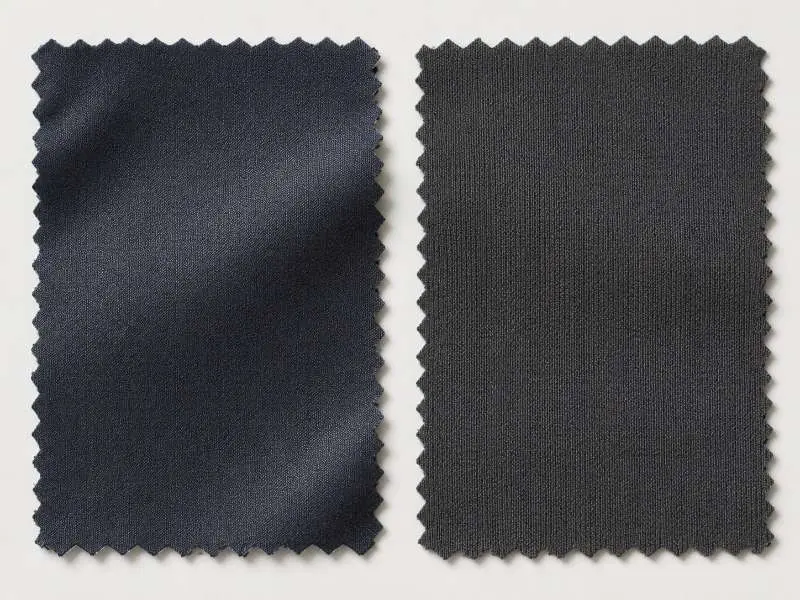
Once the fiber type is set, the numbers that follow determine whether the finished legging actually performs. Fabric weight, typically expressed in GSM, and spandex content are the two figures that most directly affect opacity, compression, and recovery after repeated wear and washing.
For brands ordering bulk leggings, this means the fabric brief should never stop at “nylon-spandex” — it needs a GSM range and a spandex percentage attached, since both numbers shift the result significantly even within the same fiber family.
| Fabric Profile | Typical Use Case | Directional GSM Reference Range | Main Advantage | Watch For |
|---|---|---|---|---|
| Nylon-spandex, high density | Premium yoga, lifestyle, studio wear | 220–280 GSM | Soft hand feel, strong opacity at lighter weight | Higher cost than polyester-spandex |
| Polyester-spandex | Running, high-sweat training | 200–260 GSM | Faster drying, better UV resistance, lower cost | Slightly less soft against skin |
| Nylon-spandex, compression-focused | Squat-proof, gym, studio | 250–320 GSM | Higher opacity and structure for heavy movement | Heavier hand feel, less suited to hot climates |
| Recycled polyester-spandex | Sustainability-positioned activewear | 200–260 GSM | Recycled content supports brand sustainability claims | Performance comparable to virgin polyester, not nylon-level softness |
These ranges are directional references for sampling discussions, not fixed production promises. Final GSM should be confirmed against available fabric swatches, opacity testing, and approved bulk fabric.
For a premium-positioned line, brands often begin with a nylon-spandex sample in a medium-to-heavy activewear range, then adjust GSM, spandex percentage, knit density, and finishing after opacity and recovery checks. The exact number should be confirmed against available fabric swatches and sample testing before bulk production. Brands testing this combination for the first time often start with a small-batch custom gym legging sample run before committing to bulk production.
Fabric selection only solves half of the quality equation. How the fabric is cut, sewn, and finished affects comfort, durability, and how the garment holds up over repeated washing — and this is the part most brand briefs leave entirely to the factory’s default process.
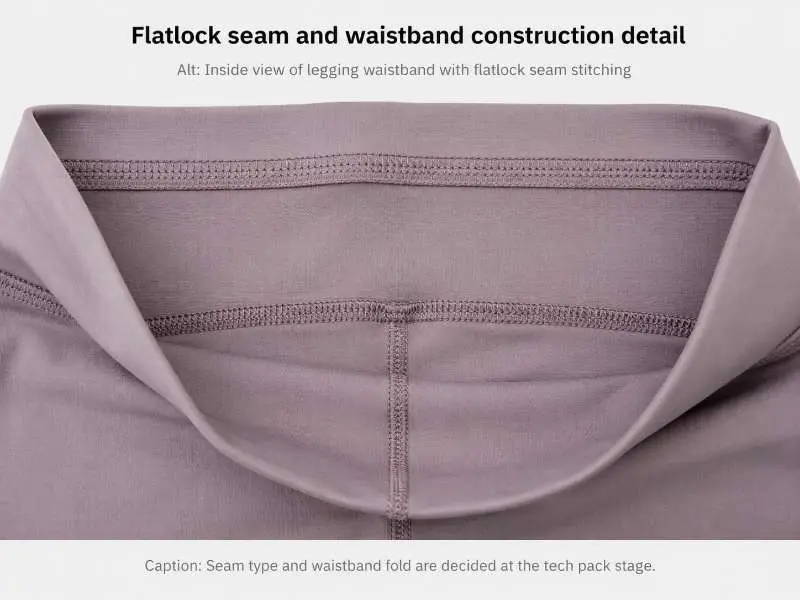
Seam construction is the first detail worth specifying. Flatlock or low-profile coverstitch seams can reduce seam bulk in high-friction areas, while overlock construction may still be acceptable for lower-cost or less compression-focused programs. Brands positioning a line as premium activewear should define seam type by location in the tech pack instead of leaving the choice to the sample room. This matters especially for products where coverage and structure are part of the promise, which is why it should connect to the guide on squat-proof construction.
Waistband construction is the second area that affects both comfort and perceived quality. A wide folded waistband with multi-needle stitching usually gives the garment more structure than a narrow single-fold band, but the final method should depend on compression target, fabric weight, and pattern design. Brands should decide on waistband width and fold method early, since changing it after the first sample round usually means a new pattern.
Finishing treatments are the final layer. Brushing or peach-skin finishing on the inside face of the fabric is typically what produces the “buttery soft” feel buyers associate with high-end leggings, and it is applied after knitting rather than being a property of the yarn itself. This means two factories using the same fiber blend can produce noticeably different hand feel depending on their finishing process — which is a useful question to ask during factory evaluation, not just during sampling.
A quality goal only becomes useful once it is translated into specifications a factory can quote, sample, and produce against. The checklist below covers the core fields a tech pack needs for a premium-positioned legging program:
Brands earlier in this process, including those still defining their product line before approaching a factory, may find it useful to review what it takes to start an activewear brand before sampling. A custom leggings manufacturer with experience across nylon-spandex and polyester-spandex programs, working within an OEM clothing manufacturing model, can advise on which combination fits a specific product brief during the sampling stage, rather than defaulting to a single fabric for every order.
Yes, if the brief defines measurable targets instead of asking to copy a named fabric. A factory can develop an independent fabric and construction spec around hand feel, opacity, compression, recovery, waistband structure, and seam type, then confirm it through sampling.
At minimum, include fiber blend and ratio, a GSM range, knit structure, seam type, waistband construction, and an explicit opacity requirement. Leaving any of these unspecified usually means the factory defaults to its standard construction, which may not match the brand’s quality target.
MOQ for custom leggings can start from 100 pieces per style and color for standard custom programs, but fabric choice, certification needs, printing method, and size/color split can change the final threshold. Confirm the exact MOQ and tier pricing before quoting the order.
Yes — within the same fiber blend, a higher GSM generally produces more structure and compression, while a lower GSM produces a lighter, more flexible feel. The right GSM depends on whether the product is positioned for high-compression training or lighter lifestyle wear.
Have a quality target in mind but need help turning it into a production spec? Share your tech pack or reference sample with Runtang, and our team can recommend a fabric and construction direction for sampling.
 Customization & Craft Guide
Clothing Shrinkage in Bulk Production: What Brands Should Approve Before Cutting
READ MORE Leggings Related
Why Are Leggings So Expensive? A Manufacturing Cost Breakdown
READ MORE T-shirts Related
How to Choose High-Quality Comfort Colors T-Shirts
READ MORE Garment Material Insights
T-Shirt Fabric Guide for Apparel Brands: Jersey, Cotton and Polyester Blends for Bulk Orders
READ MORE Hoodies Related
Why Are Camo Hoodie a Must-Have for Outdoor Enthusiasts
READ MORE