World Class Textile Producer with Impeccable Quality

World Class Textile Producer with Impeccable Quality
Key Sourcing Takeaways
Learning how to start an activewear brand means facing sourcing decisions that a basic apparel launch doesn't: fabric stretch performance, compression construction, and moisture management all affect which manufacturer can actually produce your design. Before you reach out to a factory, here's what shapes your first order — from fabric selection through to your production decision.
Most general “how to start a clothing brand” guides assume a woven or basic cotton product — a t-shirt, a hoodie, a tote bag. Activewear works differently at the fabric level. A pair of leggings or a compression top relies on four-way stretch fabric, meaning the material needs to recover its shape after stretching in both length and width, not just one direction. This single requirement already narrows your manufacturer pool: not every cut-and-sew factory runs the specialized machinery (such as flatlock or coverstitch seaming) needed to keep that stretch intact at the seam line.
For brands new to sourcing, this means the first filtering question isn’t “who makes clothing in bulk” — it’s “who has produced four-way stretch garments before.” A factory that’s never run performance fabric may quote a price and timeline that doesn’t account for the extra sampling rounds stretch fabric often requires.
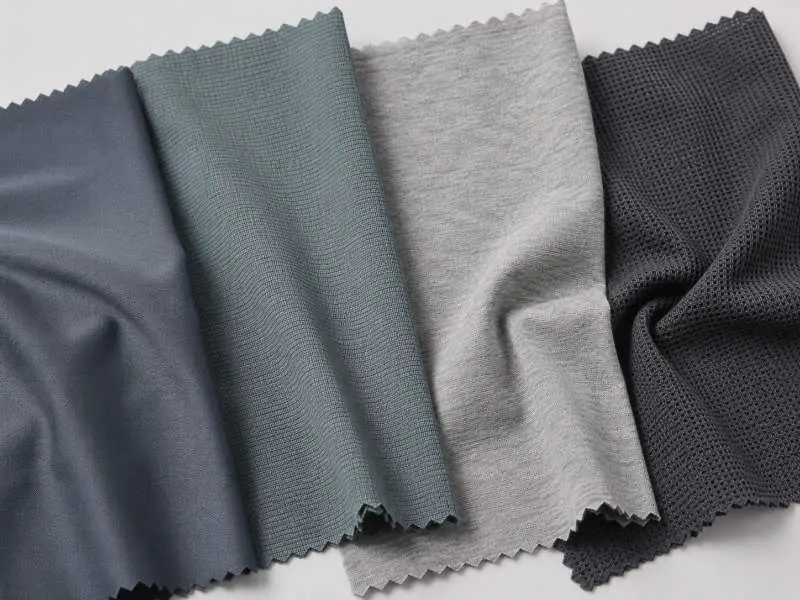
Fabric choice in activewear isn’t just about feel — it directly affects compression performance, breathability, and how your manufacturer prices and schedules your run. The table below outlines common fabric directions seen in activewear development.
| Fabric Type | Typical Use Case | Effect on MOQ and Cost |
|---|---|---|
| Nylon-spandex blend (e.g., 80/20 or 88/12) | Compression leggings, sports bras | Higher setup cost; often pushes MOQ toward the upper end of typical ranges due to specialized knitting |
| Recycled polyester-spandex | Eco-positioned activewear, casual training wear | Comparable MOQ to virgin polyester blends; cost varies by recycled content sourcing. |
| Cotton-spandex (lower stretch %) | Loungewear-leaning activewear, casual fit tops | Lower MOQ threshold possible; less suited to high-compression use cases |
| Brushed/fleece-back performance knit | Cold-weather training wear | Mid-range MOQ; fleece-backing adds a finishing step that factories typically batch across orders |
For new activewear brands, MOQ planning should start from the factory’s confirmed minimum rather than from a general industry average. At Runtang Garments, many custom garment projects start from 100 pieces per style/color, while special stretch fabrics, custom dyeing, or complex panel construction may require a higher quantity or a narrower fabric selection. If your budget sits near the minimum, confirm fabric availability, color options, and sample cost before assuming the same unit price as a larger run.
A tech pack is the single document that moves your idea from concept to an accurate quote. Without one, manufacturers are pricing based on assumptions, which is where timeline and cost surprises usually start.
Once your tech pack is ready, a manufacturer offering custom OEM production can typically turn around an initial sample more efficiently than starting from a sketch alone, since the fabric and construction decisions are already locked.
This is the decision point most general startup guides skip entirely, but it directly affects your first order’s cost and timeline.
For a first collection near the factory’s minimum MOQ, private label — using an existing base garment with your custom branding, labeling, and packaging — typically reduces both lead time and capital risk compared to fully custom pattern development. You’re not paying for a new pattern, a new grading set, or multiple fit-sample rounds; you’re customizing finish and branding on a proven base.
Full custom OEM development makes more sense once you have validated demand and want a fit or construction detail that no existing base garment offers — a specific compression panel placement, a unique seam structure, or a proprietary fabric blend. That level of customization adds pattern development time and typically requires a higher MOQ to justify the setup cost.
If you’re unsure which stage you’re at, the private label activewear route is usually the lower-risk way to test your first 1–2 collections before committing to fully custom development.
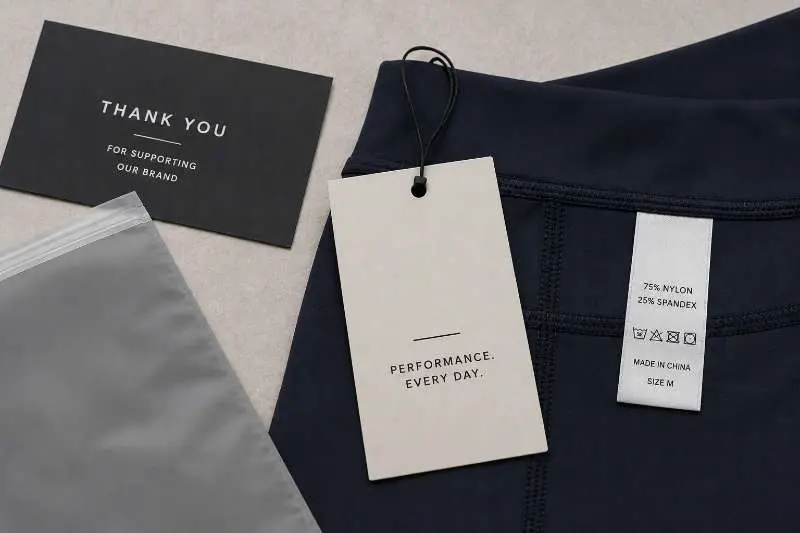
Once your fabric, construction, and label structure are settled, the remaining variable is how much capital you commit to your first run. Ordering at the minimum end of your manufacturer’s MOQ range — rather than maximizing volume for a better unit price — gives you room to adjust before reordering. This matters more in activewear than basics, because compression and fit issues are harder to spot until pieces are worn and tested by real users, not just checked on a fit form.
If your product involves performance claims or is intended for children’s activewear, ask your manufacturer early which safety or labeling standards apply to your target market, and request documentation rather than relying on marketing language alone. For example, OEKO-TEX® Standard 100 testing addresses harmful substance limits in textiles, making it most relevant when material safety, direct skin contact, or children’s activewear is part of the sourcing brief.
A manufacturer with in-house knitting and finishing capability can sometimes shorten this final planning stage, since fabric sourcing and garment construction aren’t split across separate vendors — though this is a production efficiency factor, not a guarantee of lower pricing.
MOQ depends on fabric, color, and construction complexity. At Runtang Garments, many custom garment projects start from 100 pieces per style/color, while special stretch fabrics, custom dyeing, or complex panel construction may require a higher minimum or fewer fabric options.
A tech pack isn’t always required to start a conversation, but it significantly speeds up accurate quoting and reduces sampling rounds. At minimum, specify your stretch direction, fabric weight, and construction details before requesting a quote.
For a first collection, private label typically reduces lead time and capital risk. Fully custom OEM development is worth the added cost once you’ve validated demand and need a specific construction or fabric detail unavailable on existing base garments.
Planning your first activewear collection? Share your fabric direction and target quantities, and we’ll help you map out what’s realistic for your launch stage — explore our leggings manufacturing capabilities to see current MOQ and fabric options.
 T-shirts Related
Cotton vs Polyester T-Shirt: Which Fabric Works Better for Bulk Brand Orders
READ MORE Pajamas Related
Halloween Family Pajamas 2025: Checker Bats, Candy-Stripe Bones & Retro Ghosts
READ MORE Top Clothing Manufacturer Recommend
Top 8 Loungewear Manufacturers in China
READ MORE Garment Material Insights
Corduroy Fabric Characteristics and Application
READ MORE Leotard Related
Gymnastics Competition Leotards: Custom Design, Print and Bulk OEM Guide for Clubs
READ MORE