World Class Textile Producer with Impeccable Quality
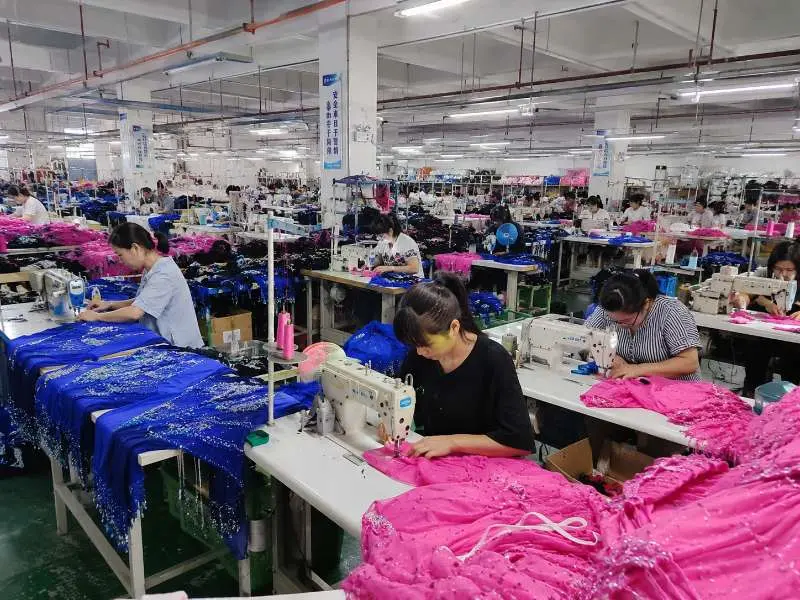
World Class Textile Producer with Impeccable Quality

Key Sourcing Takeaways
Ordering custom dance costumes in bulk from China requires decisions on fabric base, print method, embellishment placement, sample approval and MOQ before cutting starts. Studios and dance apparel brands moving from retail or small-batch suppliers need more than a design reference: the factory needs printable artwork, stretch fabric specs, placement diagrams and approval checkpoints. In Runtang's dancewear OEM work, the same checkpoints come up repeatedly: fabric base, print compatibility, embellishment placement, sample approval and size grading before bulk cutting. This guide focuses on the manufacturing decisions that affect cost, consistency and delivery risk in an OEM order.
Most search results for custom dance costumes lead to US-based small-batch suppliers — Etsy sellers, regional dancewear brands, and semi-custom catalog companies — built around single-piece or small-team orders with retail markups built in. Few explain what changes when a studio or brand needs several hundred pieces across multiple designs for a season or a competition circuit.
That gap is where OEM factory sourcing applies. A factory built around bulk production handles print runs, embellishment, and cutting at a scale retail suppliers were never set up for, and the unit economics work differently once a single design clears its minimum order quantity. For brands or studios planning a multi-design season — different colorways for different routines, or matching dance leotard styles for brands across age divisions — sourcing directly from an OEM factory means the cost curve bends in your favor earlier than working through a retail-facing supplier.
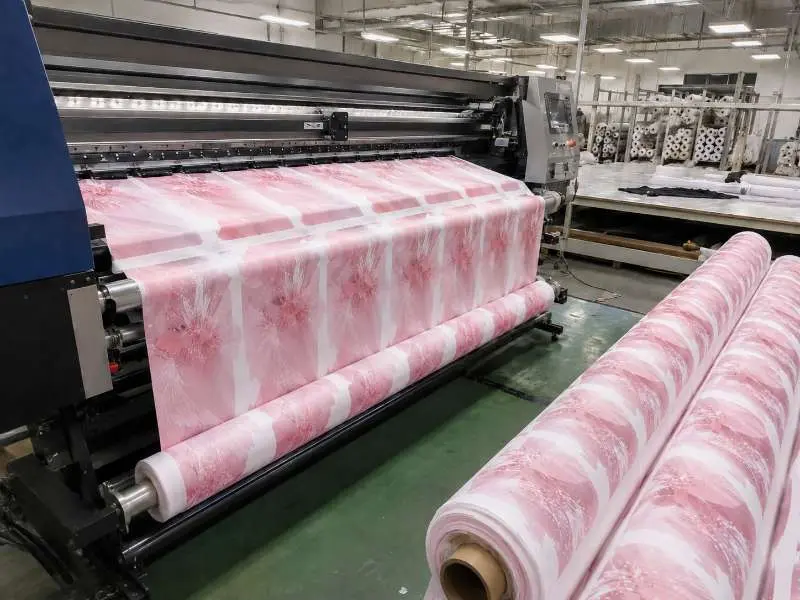
For polyester-spandex dance costumes, sublimation is usually the safest print method for full-panel artwork because the dye becomes part of the polyester fiber instead of forming a thick surface layer. For brands ordering stretch-heavy dancewear, this means gradients, large color blocks and stage-facing artwork can move through cutting, sewing and size grading with less surface cracking risk than heavy screen-print placement on high-stretch zones.
This matters most for multicolor and gradient designs — the kind competitive dance and gymnastics costumes typically use to read clearly from a distance on stage. Sublimation supports photographic-quality, multi-tone color work in a single pass, while screen printing requires a separate screen per color and adds cost and lead time as the design gets more complex.
For bulk dance costume orders, the factory check is not simply “which print method looks better.” The key question is whether the artwork can stay consistent after stretch, cutting, sewing and size grading. Sublimation usually works best when the base fabric is polyester-spandex and the design includes gradients, large color blocks or full-panel artwork. For non-dancewear categories, compare broader garment print methods separately rather than expanding that discussion inside this dance costume guide.
| Decision Point | Best Fit for Custom Dance Costumes | Factory Check Before Bulk |
|---|---|---|
| Full-panel color or gradient artwork | Sublimation on polyester-spandex | Confirm artwork scale across youth and adult sizes before cutting |
| Simple logo or small flat graphic | Screen print or silicone transfer | Keep placement away from high-stretch bodice and legline zones |
| Nylon-spandex base fabric | Digital print or transfer method may be reviewed | Confirm fabric compatibility before sample approval |
| Multi-size team order | Same print file adjusted through size grading | Check whether motifs still align with seams and panels |
For most custom dance costumes with full-color artwork, sublimation remains the safest production choice; screen print or transfer methods should be limited to small graphics, logos or low-stretch placement areas.
The polyester-spandex base behind that recommendation sits on the same nylon vs polyester activewear fabric tradeoffs that apply across performance categories beyond dance costumes.
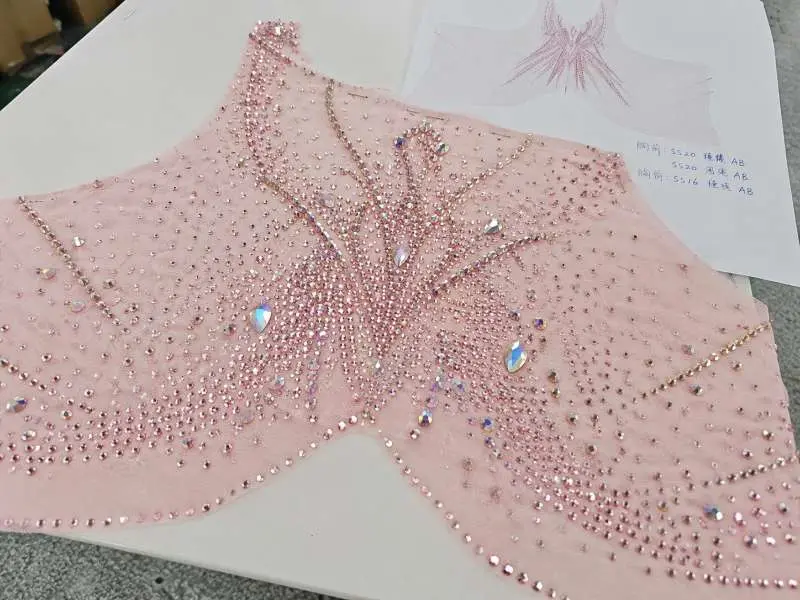
Rhinestone and crystal hot-fix work adds a manufacturing step that small-batch retail suppliers often limit or price as a premium add-on. At factory scale, rhinestone application is typically quoted with a minimum order quantity of around 200 pieces per design — below that volume, the hot-fix machine setup and labor cost per piece make the embellishment disproportionately expensive. This does not replace the standard leotard MOQ; it applies specifically to embellished designs where hot-fix setup, stone count and placement labor change the cost structure.
Before a bulk run starts, the factory produces a placement sample showing the actual rhinestone density and pattern on the garment, not just a flat sketch. This is the stage where studios should confirm stone density, color mix, and pattern alignment across seam lines — changes made after the placement sample is approved typically mean resampling, which adds time back into the schedule. Sampling for a new design, once the tech pack and reference details are confirmed, typically takes 7 to 15 days depending on the complexity of the embellishment and the number of revision rounds needed.
Brand or studio logos on dance costumes are typically applied either as a silicone heat-transfer print or as embroidery, and the two have different cost and durability profiles. Silicone logo application generally costs less than embroidery, which makes it the more common choice for season-specific team branding where the design might change next year.
Embroidery costs more to produce but holds up differently over repeated wear and washing, particularly at friction points like waistbands or underarm seams where a heat-transferred logo is more exposed to abrasion. For costumes worn primarily on stage with limited wash cycles, the cost savings from silicone typically outweigh the durability difference. For practice wear or costumes that go through frequent laundering across a competition season, the wear pattern is worth discussing with the factory before locking in the application method. For broader testing language around textile properties and end-use performance, ASTM International's textile standards are a useful reference point when comparing supplier claims.
| Method | Relative Cost | Best Placement | Wear Considerations |
|---|---|---|---|
| Silicone Heat Transfer | Lower | Low-friction areas (chest, back panel) | Cost-efficient for season-specific branding |
| Embroidery | Higher | High-friction or high-wash items | Holds up better under repeated abrasion and laundering |
For a single-season competition costume with limited wash cycles, silicone logo application is usually the more cost-efficient choice; for practice wear or multi-season pieces, the extra embroidery cost can be worth it at high-friction placement points.
Holiday-themed routines — Christmas recitals and Halloween-themed competition numbers — are one of the most common reasons studios plan a seasonal costume order outside the regular competition calendar. The decoration approach is the same one already covered above: sublimation handles the all-over red-and-green or orange-and-black color blocking these designs typically need, since a gradient or multi-panel holiday palette is exactly the kind of artwork sublimation is built for, and rhinestone accents layer on top for stage sparkle the same way they do on a standard competition piece.
The timing risk is different, though. Holiday and recital-season orders cluster around the same few weeks industry-wide, so a factory's decoration capacity for that window fills up faster than it does during an off-peak month. Studios planning a holiday-themed costume should submit the design brief and tech pack earlier than they would for a mid-season order, rather than assuming the standard sampling window still applies once that seasonal demand spike hits.
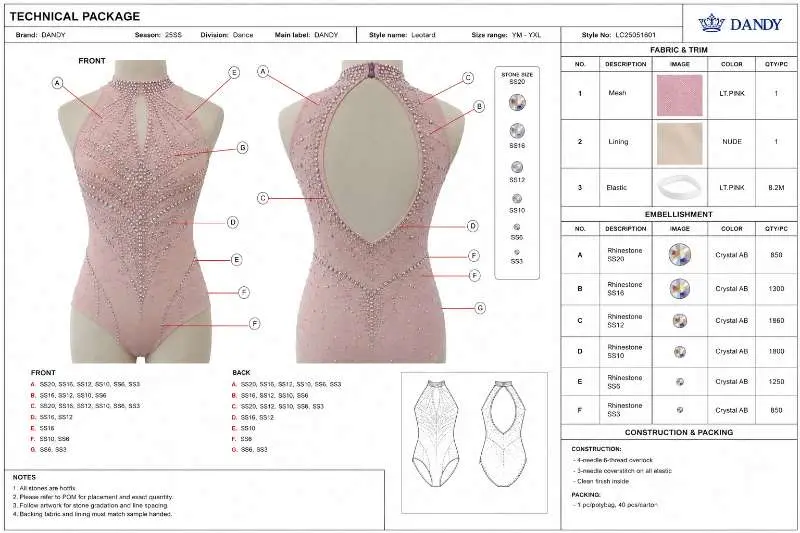
A tech pack that only includes a sketch and a few measurements forces the factory to guess at embellishment placement, which adds sampling rounds. For dance costumes specifically, the tech pack should include an embellishment placement diagram showing exactly where rhinestones, sequins, or logos sit relative to seams and panels; backing fabric specifications for any heat-applied embellishment, since the backing affects both stretch and wash durability; and coverage requirements stating whether embellishment is full-coverage, scattered, or outline-only, since each approach changes both the rhinestone count and the production time per piece.
A complete tech pack at the brief stage is also what keeps the 7-to-15-day sampling window realistic — incomplete specifications are the most common reason a first sample misses the mark and a second round becomes necessary.
Buying off-the-shelf or semi-custom costumes from a retail supplier means paying a per-piece markup that doesn't move much regardless of order size — the supplier is already buying from a factory and adding margin on top. Ordering directly from an OEM factory shifts the cost structure: printing, embellishment and cutting setup are spread across the run, so the per-piece quote usually becomes more workable once a design clears its MOQ. Larger runs may improve the unit-cost structure further, but the final quote still depends on fabric, print coverage, embellishment density and packing requirements.
This is the structural reason studios moving from retail dancewear to direct OEM sourcing often find the transition makes financial sense earlier than expected, particularly for studios ordering multiple designs per season or matching costumes across age divisions. The trade-off is that OEM ordering requires more upfront specification — tech pack, placement sample approval, color confirmation — than placing a retail order, which is the process the next section covers.
Placing a custom dance costumes order with an OEM factory follows a sequence that's different from browsing a retail catalog, and skipping a step is usually what causes delays later in the run.
Studios working through this sequence for the first time often find that the placement sample stage — similar to the custom leotards ordering process used across other Runtang dance and competition apparel orders — is where most of the back-and-forth happens; getting it right before bulk cutting starts is what keeps the rest of the schedule on track.
MOQ for embellished custom dance costumes is typically around 200 pieces per design. Orders below that threshold usually carry a higher per-piece cost because rhinestone or crystal application setup doesn't scale down efficiently.
Sampling typically takes 7 to 15 days once the factory has a complete tech pack and design details confirmed. Incomplete specifications at the brief stage are the most common reason this timeline extends.
Sublimation is generally the better fit for polyester-spandex dance costumes because the dye bonds into the fiber and moves with the stretch. Screen printing works for simpler, low-stretch designs but is more prone to surface cracking on heavily stretched panels.
Silicone heat transfer generally costs less and works well for season-specific branding on low-friction placement. Embroidery costs more but holds up better at high-friction or frequently washed areas.
Yes, but the factory should confirm size grading before bulk cutting. Youth and adult patterns usually need adjusted torso length, strap placement and coverage checks, especially when rhinestones or printed artwork must align across sizes.
Sourcing a custom dance costume order for your studio or dance apparel brand? Explore Runtang's leotard and bodysuit production capabilities, review the broader OEM production workflow, or get in touch directly to discuss your tech pack and timeline.
 Leggings Related
Why Are Leggings So Expensive? A Manufacturing Cost Breakdown
READ MORE Sourcing & Supplier Guide
Clothing Quality Inspection: What Brand Buyers Should Check Before Shipment
READ MORE Hoodies Related
How to Choose the Best Fleece Hoodie: A Complete Guide for Hoodie Fleece Fabric
READ MORE Top Clothing Manufacturer Recommend
Top 8 Loungewear Manufacturers in China
READ MORE Leotard Related
Custom Leotards: Construction Choices Brands Should Confirm Before Bulk Production
READ MORE