World Class Textile Producer with Impeccable Quality

World Class Textile Producer with Impeccable Quality
Key Sourcing Takeaways
A clothing quality inspection before shipment should verify that sampled garments match the approved sample, measurement chart, workmanship criteria, labeling requirements, order quantity, and packing specification. Brand buyers also need to define when inspections occur, which AQL sampling plan applies, and who has authority to approve rework or shipment. For hoodies, t-shirts, and leggings, the checklist should reflect product-specific risks such as shade variation, print placement, seam construction, stretch recovery, and measurement tolerance. Confirming these criteria before production prevents the final inspection from becoming the first time the buyer and factory compare their definitions of a pass.
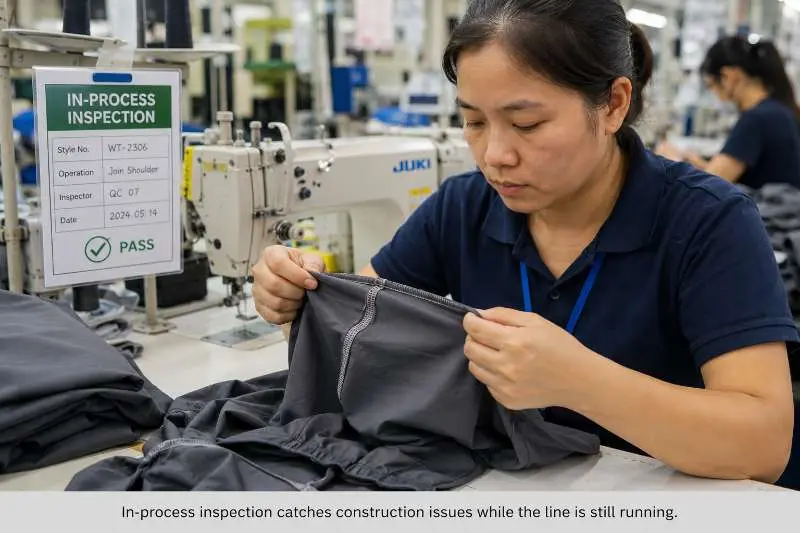
A clothing quality inspection isn't a single event at the end of production — it's a sequence of checks that starts before cutting begins. Most OEM production runs through three stages:
At Runtang, our internal QC team carries out in-process and pre-packing checks as part of the agreed production plan, separately from any inspection appointed by the brand. For brands working with an OEM clothing manufacturer for the first time, the practical question is not simply whether the factory has a QC team, but which stages are included in the order, what records are produced, and how non-conforming goods are handled before shipment.
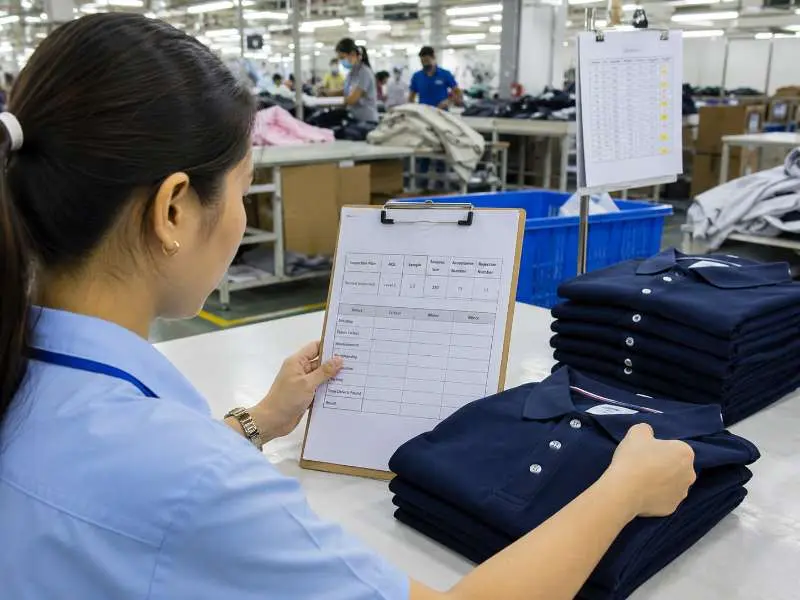
A pre-shipment inspection should compare the sampled garments with the approved sample, tech pack, purchase order, measurement chart, defect list, and packaging specification. The checklist should cover at least the following areas:
For stretch products such as gym leggings, the inspection checklist should also define relaxed and stretched measurements, waistband construction, seam condition, and any appearance or opacity checks required by the brand. These criteria should be finalized during the sample approval process, rather than introduced at final inspection.
Every result on the inspection report should trace back to an approved document, physical sample, or written acceptance criterion. Without that reference, the inspector can identify variation but cannot consistently determine whether it constitutes a failure.
Once the inspection scope is defined, AQL—Acceptance Quality Limit—determines how a lot is sampled and which acceptance or rejection numbers apply. It does not mean that the stated AQL percentage is automatically the allowable percentage of defective garments in the complete shipment. The sampling plan must also identify the lot size, inspection level, sample size, defect classifications, and Ac/Re numbers.
| Defect Level | Typical Treatment |
|---|---|
| Critical | The inspection plan should state the acceptance number explicitly. For a safety, regulatory, or serious product defect, a buyer may set Ac 0 so that one finding rejects the inspected lot. |
| Major | Example buyer-selected setting: AQL 2.5. This value applies only when it is written into the approved inspection plan. |
| Minor | Example buyer-selected setting: AQL 4.0 for defined cosmetic defects, subject to the brand’s own defect list and market requirements. |
AQL 2.5 for major defects and 4.0 for minor defects are examples of buyer-selected settings, not values mandated for apparel by ISO 2859-1. Two brands inspecting the same garment may therefore use different limits or classify the same issue differently according to their approved defect lists and market requirements.
The current ISO 2859-1:2026 standard defines AQL-indexed sampling schemes for lot-by-lot inspection, so the purchase order should identify the sampling plan and inspection level that apply to the order.
Internal QC and an independent inspection serve different purposes. Factory QC is part of production control and is intended to identify construction, measurement, workmanship, and packing problems before the order reaches the final approval stage. A third-party inspection provides a separate report against the buyer’s approved criteria and is often used when a brand wants independent verification.
A brand may appoint SGS, Intertek, Bureau Veritas, or another qualified inspection company, provided factory access and timing have been agreed in advance. Before production starts, the purchase order should state who books the inspection, which documents the inspector will use, who receives the report, whether shipment requires a passed report, and who is responsible for reinspection costs if the first inspection fails.
The presence of an outside inspector does not replace the factory’s own process controls. It verifies the condition of the sampled lot at a defined stage; it does not correct production problems that should have been identified earlier.
Before approving a bulk order for shipment, it's worth getting clear answers on the following:
These questions apply whether a brand is sourcing from a new supplier or reviewing the process with an existing one — the answers should be consistent and confirmed in writing before production, not assumed after.
A reliable clothing quality inspection process begins with written acceptance criteria before production. The purchase order or quality plan should identify the approved sample, measurement tolerances, defect classifications, AQL settings, inspection stages, reporting requirements, and the action required when a lot fails.
For bulk t-shirt, hoodie, or activewear orders, confirming these points before cutting gives the factory, buyer, and any appointed inspector the same basis for deciding whether sampled garments pass, require rework, or need reinspection.
There is no universal AQL level mandated specifically for clothing. A brand may select AQL 2.5 for major defects and AQL 4.0 for minor defects as buyer-defined starting settings, but the purchase order must also state the inspection level, sample size, defect definitions, and acceptance or rejection numbers.
Yes, provided the factory visit and inspection window are agreed in advance. A buyer may inspect personally or appoint an independent inspector, but the purchase order should clarify access, reporting, shipment approval, and reinspection terms.
Preparing a bulk order with defined inspection requirements? Share your tech pack, measurement chart, approved sample details, and quality plan with our OEM production team before cutting begins.
 Top Clothing Manufacturer Recommend
Top 8 Hoodie Manufacturers in China
READ MORE Hoodies Related
How to Find a Hoodie Manufacturer for Your Clothing Brand
READ MORE T-shirts Related
The Secrets Behind T-Shirt Manufacturing: From Design to Finished Product
READ MORE Sourcing & Supplier Guide
Clothing MOQ Explained: What Apparel Brands Should Expect from OEM Factories
READ MORE T-shirts Related
How to Choose the Right T-shirt Garment Manufacturers to Create High-Quality Clothing
READ MORE