World Class Textile Producer with Impeccable Quality
World Class Textile Producer with Impeccable Quality

Key Sourcing Takeaways
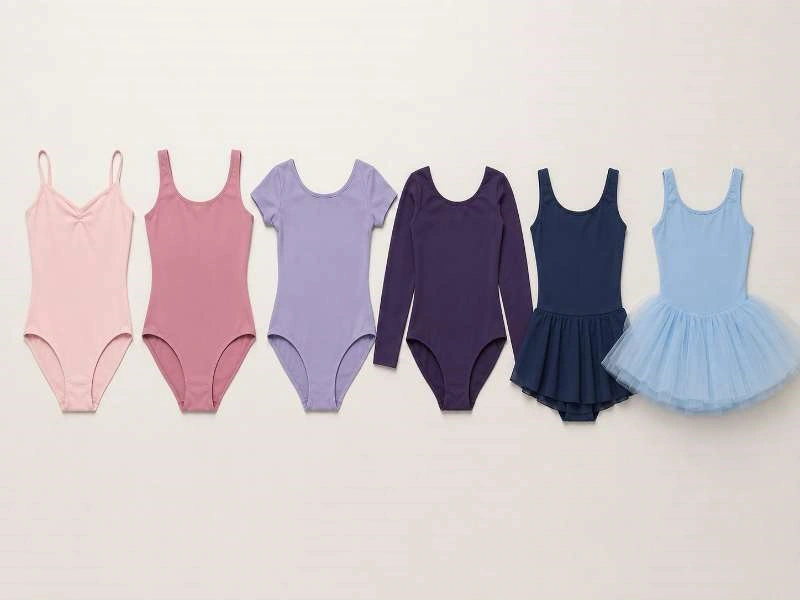
Brands sourcing leotards for studio uniform programs or recital collections need to know which of the common leotard styles fit their budget and sizing range before they send a tech pack to a factory. The six styles below look similar on a size chart but use different strap, sleeve, and skirt constructions, and confusing one for another at the spec stage is a common cause of fit complaints in bulk orders. Here's how each style differs and what to confirm before placing a production order.
Most dancewear and gymnastics uniform programs draw from the same six base styles. The table below summarizes what each style is typically used for and the one spec point that differs most from the others.
| Style | Best For | Starting MOQ | Key Spec to Confirm |
|---|---|---|---|
| Camisole | Ballet schools, daily class wear | 100/style/color | Strap width and neckline arc |
| Tank/Sleeveless | Multi-disciplinary studio programs | 100/style/color | Shoulder strap width vs. camisole |
| Short Sleeve | Basic training, kids' classes | 100/style/color | Armhole shape and sleeve length |
| Long Sleeve | Performance, cold-season practice | 100/style/color | Shoulder mobility and cuff finish |
| Skirted | Ballet performance, recital | 100/style/color | Skirt attachment height and lining |
| Tutu | Children's recital, gymnastics showcase | 100/style/color | Skirt-to-body proportion by size |
For brands building a studio uniform program across multiple age groups, starting with camisole or tank styles keeps tooling simple, while skirted and tutu options should be budgeted as separate development rounds rather than treated as simple trim add-ons.
Camisole leotards use thin shoulder straps and a scooped or curved neckline, and they're the style most studio uniform buyers default to for recital and daily class wear because the torso pattern scales cleanly across youth and adult sizing. The two dimensions to lock before sampling are strap width — typically narrower than tank straps — and neckline arc, since a deeper scoop changes chest coverage without changing the body block. Strap width grading is where this style most often breaks down at scale: when a factory holds strap width fixed instead of grading it proportionally across sizes, a youth-XS and an adult-L end up with visually mismatched shoulder coverage even though both pass the flat measurement. During leotard sampling, the pattern team should check strap grading separately from the body block, because this is the detail most likely to create a visible mismatch across youth and adult sizes if it is not called out clearly in the tech pack.
Tank leotards keep the same torso block as a camisole but use wider, structural straps that sit closer to the shoulder seam. This makes tank styles a common second SKU for studios that want more shoulder coverage in younger size ranges without commissioning a sleeved style. Brands ordering both camisole and tank in the same collection should confirm the back panel height is documented separately for each style, since strap width changes how much back coverage is needed to keep the garment from gapping during movement.
Short-sleeve leotards add a fitted cap or short sleeve to the same torso block used for camisole and tank styles, and they are typically the entry point for basic training programs and younger class levels, where more shoulder coverage is preferred. Armhole shape is the detail that decides whether this style performs well in motion: a higher, well-balanced armhole supports a fuller range of motion, while one cut too tight pulls at the underarm the moment a student raises an arm overhead. Fit-sample review should check sleeve length and armhole shape together rather than as two separate flat measurements, because a sleeve can measure correctly on the table and still bind on the body — the same risk that applies to long sleeve styles below, just at a smaller scale.
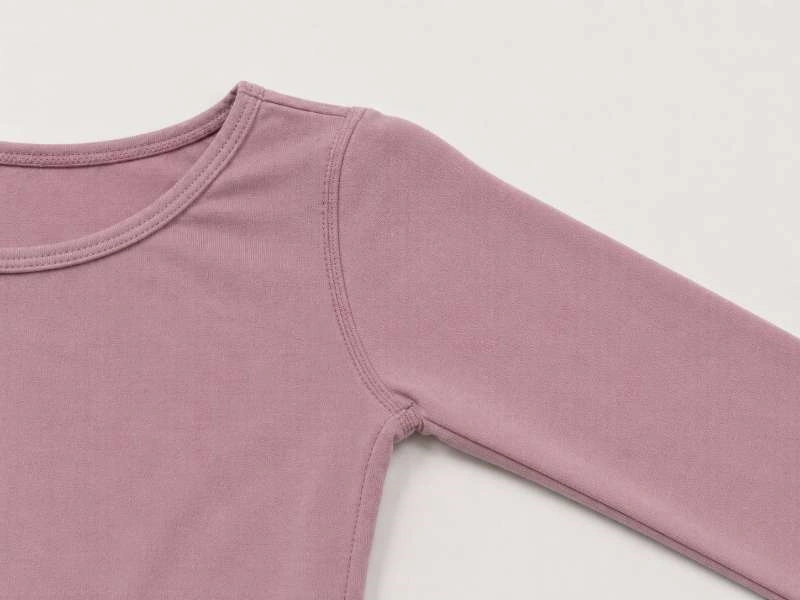
Long sleeve leotards extend coverage to the wrist and are the style most often requested for performance programs and cold-weather practice sessions. Because the sleeve runs the full arm length, shoulder mobility becomes the spec that matters most: brands ordering long sleeve programs in bulk should ask their production partner to confirm a range-of-motion check at the fit-sample stage, not just a flat measurement, since a sleeve that measures correctly on a table can still restrict a raised-arm position on the body.
Skirted leotards attach a separate skirt panel to the base leotard at the waist seam, and the construction decision that matters most is attachment position and lining. A skirt set higher on the torso reads differently on stage than one set at the natural waist, and brands should confirm whether the skirt is fully lined or uses a single layer of mesh fabric — lining adds cost but holds shape better across repeated washing. Because the skirt changes the torso pattern rather than just adding trim, skirted styles typically need a separate fit sample from the base camisole or tank pattern.
Tutu leotards take this further with a fuller, gathered skirt built for visual volume rather than drape. The production difference from a skirted leotard is in skirt density and proportion: a tutu skirt typically uses multiple tulle or mesh layers gathered at a higher ratio, which affects both fabric usage and how the finished garment holds its shape during repeated wear. The proportion between skirt volume and body size is what makes or breaks this style in production: a skirt panel graded at the same ratio as an adult size, simply scaled down, sits too full on a youth-sized torso and changes how the garment moves on stage. For tutu programs across multiple age bands, skirt density should be graded separately instead of scaling one adult skirt ratio down, which is the detail worth confirming before a multi-age recital order goes to bulk.
| Feature | Skirted Leotard | Tutu Leotard |
|---|---|---|
| Skirt construction | Single panel, lighter drape | Multiple gathered layers, higher density |
| Best for | Ballet performance, recital | Children's recital, gymnastics showcase |
| Key spec to confirm | Attachment height and lining | Skirt-to-body proportion by size |
For brands ordering recital programs across multiple age groups, skirted styles scale more predictably across sizes, while tutu styles need size-specific proportion checks to avoid an oversized skirt look on younger torsos.
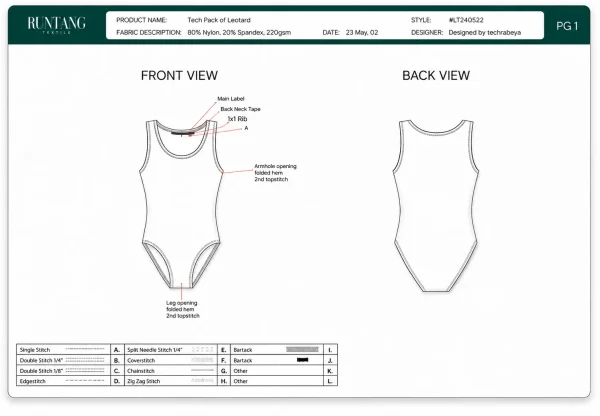
Across all six types of leotards covered above, many bulk-order fit problems trace back to a tech pack that does not separate style-specific specs clearly enough. Fabric and workmanship still matter, but strap width, sleeve shape, skirt attachment, and crotch construction should be documented per style. Before sending a custom leotard production order to the factory, brands should confirm that the following points are documented per style, not copied across one shared spec sheet for the whole collection:
Brands working with an OEM clothing production partner should treat these per-style differences as a supplier-review checklist, not just a sampling issue. For a broader supply-chain due diligence context, the American Apparel & Footwear Association (AAFA) maintains resources on responsible sourcing, traceability, and apparel supply chain standards.
The standard MOQ is 100 pieces per style per color, and this applies the same way to camisole, tank, sleeved, skirted, and tutu styles. Mixing several styles in one collection is common, but each style is typically counted as a separate line for MOQ purposes.
Yes. Brands building a studio uniform program across multiple styles can request samples for each style separately before confirming bulk quantities, which is the standard way to catch the per-style fit issues described above.
Yes. Skirted and tutu leotards usually take longer than camisole or tank styles because the skirt panel is cut, attached, and finished as a separate construction step. Tutu styles may add more time when multi-layer tulle or higher skirt density is required. Brands should ask the factory to separate the base-body timeline from the skirt-attachment timeline when quoting.
Building a studio uniform program with multiple leotard styles? Share your style list or rough sketch through our custom leotard production page, and we’ll help confirm the specs for each style before sampling.
 Customization & Craft Guide
Size Grading for OEM Clothing: What Brands Need to Prepare Before Bulk Production
READ MORE Customization & Craft Guide
Lab Dip and Bulk Color Approval for Custom Apparel Orders: A Brand Buyer’s Guide
READ MORE Sourcing & Supplier Guide
Garment Sampling Process: What Apparel Brands Should Manage at Each Stage
READ MORE Customization & Craft Guide
Clothing Shrinkage in Bulk Production: What Brands Should Approve Before Cutting
READ MORE Leotard Related
Dance Leotards: A Sourcing Guide for Studio Uniform and Private Label Programs
READ MORE