World Class Textile Producer with Impeccable Quality
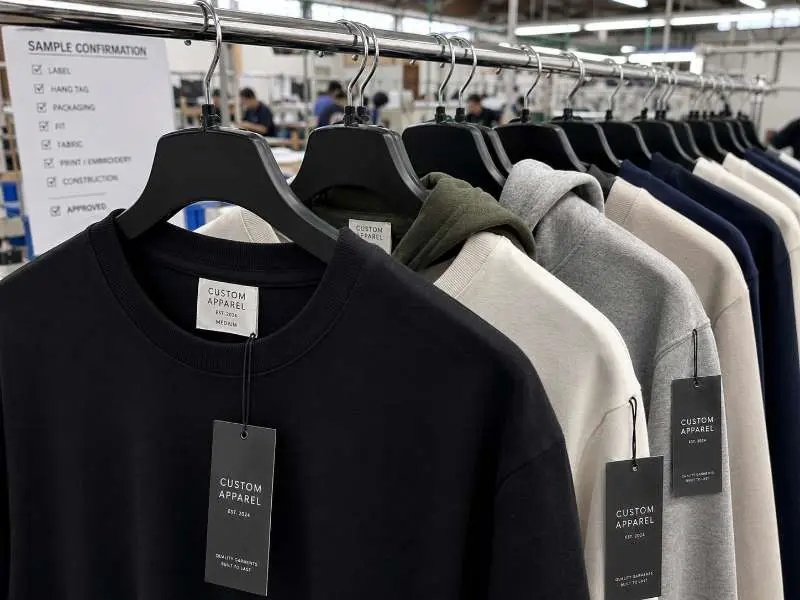
World Class Textile Producer with Impeccable Quality
Key Sourcing Takeaways
A lot of apparel brands arrive at the same decision point: they know they want to sell clothing under their own label, but they are not sure what to do first. Should they sketch a design? Contact a factory? Research fabric options? The sequence matters more than most first-time buyers expect.
The brands that waste the most time in early development usually have one thing in common: they contact factories before making the foundational decisions that factories actually need to move forward. This guide maps out those decisions in the order they need to happen — from clarifying what private label production means in a manufacturing context, to getting your first bulk order out the door.
"Private label" is one of those terms that gets used to mean several different things depending on who is saying it. In a manufacturing context, the production model behind your private label program determines everything — your level of design control, your MOQ, your development timeline, and how much a factory can help you before you have a finished tech pack.
There are three distinct models brand buyers typically encounter when approaching factories:
| Production Model | Brand Controls | Factory Provides | Best For |
|---|---|---|---|
| OEM (Original Equipment Manufacturing) | Full design, specs, tech pack | Cut-and-sew, materials, branding execution | Brands with clear product vision |
| ODM (Original Design Manufacturing) | Label, colorway, minor adjustments | Ready design templates + production | Brands testing market fit quickly |
| White Label / Blanks | Branding only (logo, label) | Finished garment from existing catalog | Earliest-stage testing, minimum investment |
The table above reflects how these models differ in practice. The key distinction for brand buyers: OEM requires you to bring the design direction; ODM means selecting from what the factory has already developed; white label means labeling an existing product with minimal modification.
In practice, many brands move toward OEM once they need specific fabrics, construction, or branded packaging instead of a catalog-based product. For buyers starting a clothing brand with OEM production, this is also the stage to align product category, brand control, MOQ, and factory capability before sampling. If the choice between white label and private label clothing is still unclear, clarify that route before sampling, because it affects design control, MOQ, and what the factory needs from you. Brands using blank hoodies or plain T-shirts as their starting point often begin with relabeling, then compare private label vs wholesale blanks before moving toward full OEM as their collection matures.
This is where most first-time buyers lose weeks. A factory cannot quote, sample, or advise effectively until it understands what you are actually building. An inquiry that says "I want to make hoodies with my logo" triggers a round of clarifying questions that could have been answered upfront. An inquiry that includes category, fabric direction, customization scope, and order volume moves into production discussion immediately.
Here is what needs to be defined before the first factory conversation:
| What to Define | Why It Matters |
|---|---|
| Product category | Which garment type: hoodie, T-shirt, leggings, pajama set, etc. |
| Fabric direction | Preferred fiber content and weight range. Exact specs are refined during sampling, but a starting direction helps factories advise on suitable options. |
| Customization scope | Print methods, labels, trims, and packaging — what needs to be custom versus what can remain standard. |
| Target quantity | Planned order volume. Even a rough range (100 pcs vs. 500 pcs) changes how a factory structures their response. |
| Reference sample or sketch | Not required, but any visual reference significantly reduces back-and-forth in early communication. |
You do not need a finalized tech pack at this stage — that comes later. But you do need enough product clarity to evaluate whether a factory's capabilities match your requirements, and to give them enough context to provide a useful response.
From a factory perspective, the difference between an unclear inquiry and a defined one is not just efficiency — it is also a signal. Buyers who have done the pre-work tend to be more decisive through sampling, more realistic about timelines, and more straightforward to work with through to bulk.
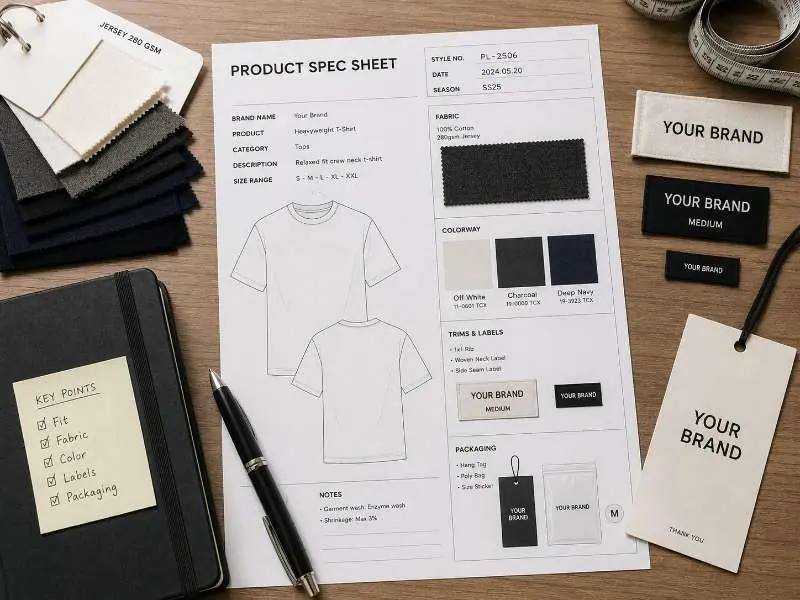
Not every factory is set up to support a full private label program. Some handle cut-and-sew but outsource label printing and packaging. Others offer full branding execution — woven labels, hang tags, polybag or box packaging — from within the same production chain. For private label buyers, the second type reduces variables considerably.
Three practical criteria for evaluating factories at this stage:
A vertically integrated setup — where fabric production, dyeing, cut-and-sew, and finishing happen within the same ownership structure — gives brands better cost visibility and more stable quality across orders. For brands placing their first bulk orders, this kind of supply chain transparency matters more than it might seem upfront.
For category-specific projects, Runtang can support custom hoodies, T-shirt programs, and pajama set production within the same private label development framework.
Sampling is where product definition gets tested against physical reality. It is also where many brands underestimate how much they need to bring to the table to make the process efficient.
To initiate sampling, a factory typically needs:
Sampling often involves more than one iteration, depending on how complete the initial spec is. The first sample usually validates construction and fit; later revisions may address fabric hand, color accuracy, label placement, or packaging details before the buyer approves bulk production.
For brands developing pajama sets or sleepwear, label content requirements need to be confirmed early in the sampling stage, since finished garment labels must include specific regulatory information for the target market.
Once sample approval is complete, moving to bulk production involves a set of decisions and checkpoints that first-time buyers often skip — and often the source of post-shipment problems.
Bulk production should not begin until the sample has been signed off in writing. This means confirming fit, construction, fabric, colorway, and all branding elements — label text, hang tag content, packaging spec. If any element is still unconfirmed, resolve it before production starts, not during.
For brands selling into the United States, label content should be confirmed before bulk production begins. Fiber content, country of origin, care instructions, and the manufacturer, dealer, or RN identity may need to be reviewed depending on the product category and sales market. Beyond the garment label itself, the AAFA supply chain compliance resources can help brand teams think through sourcing, responsibility, and risk-control checkpoints before shipment. Label revisions after production usually mean relabeling, extra handling, and delayed delivery.
A basic pre-shipment inspection — whether conducted by a third-party inspector or the factory quality control team — should cover:
For a first order, the inspection scope should be agreed before shipment based on order size, product complexity, and buyer risk tolerance. Even a limited pre-shipment check can help detect repeated issues before the goods reach the buyer's warehouse, but the inspection method should be confirmed with the factory or a third-party QC provider.
OEM (Original Equipment Manufacturing) is the production model — the factory produces garments based on your specifications. Private label is the commercial arrangement — you sell those garments under your own brand name. In practice, most private label clothing programs are executed through OEM production. The two terms describe different aspects of the same process.
The standard MOQ at Runtang is 100 pieces per style per color. This applies across most garment categories discussed here, including hoodies, T-shirts, and pajama sets. Lower quantities may be discussed for sample orders during the development phase.
A tech pack is the most efficient way to communicate your product spec to a factory, but it is not a hard requirement to get started. If you have a reference sample, detailed measurements, and clear notes on fabric and branding requirements, most factories can initiate the sampling process and help refine the spec from there. If the first inquiry starts from a reference sample, the sampling stage can help refine missing measurements, construction notes, and branding details into a clearer production spec.
Whether you have a finished tech pack or just a product direction, the development conversation starts the same way: with a clear picture of what you are building and who you are building it for. Share your product idea, reference sample, or design sketch — we will advise on fabric options, branding scope, and what a realistic first-order timeline looks like for your category.
Planning a private label clothing line for hoodies, T-shirts, or pajama sets? Share your product idea, reference sample, or rough sketch, and Runtang's production team can advise on fabric direction, branding scope, sampling preparation, and first-order setup.
 Hoodies Related
Why Are Camo Hoodie a Must-Have for Outdoor Enthusiasts
READ MORE Top Clothing Manufacturer Recommend
Top 8 Sweatshirt Manufacturers in China
READ MORE Sourcing & Supplier Guide
Clothing MOQ Explained: What Apparel Brands Should Expect from OEM Factories
READ MORE T-shirts Related
Cotton vs Polyester T-Shirt: Which Fabric Works Better for Bulk Brand Orders
READ MORE Leotard Related
Gymnastics Competition Leotards: Custom Design, Print and Bulk OEM Guide for Clubs
READ MORE